With my 2019 line amp, I wanted to create a simple but extremely refined line amp. With remarkable IC:s like LM 4562, it is not difficult, and it is not expensive.
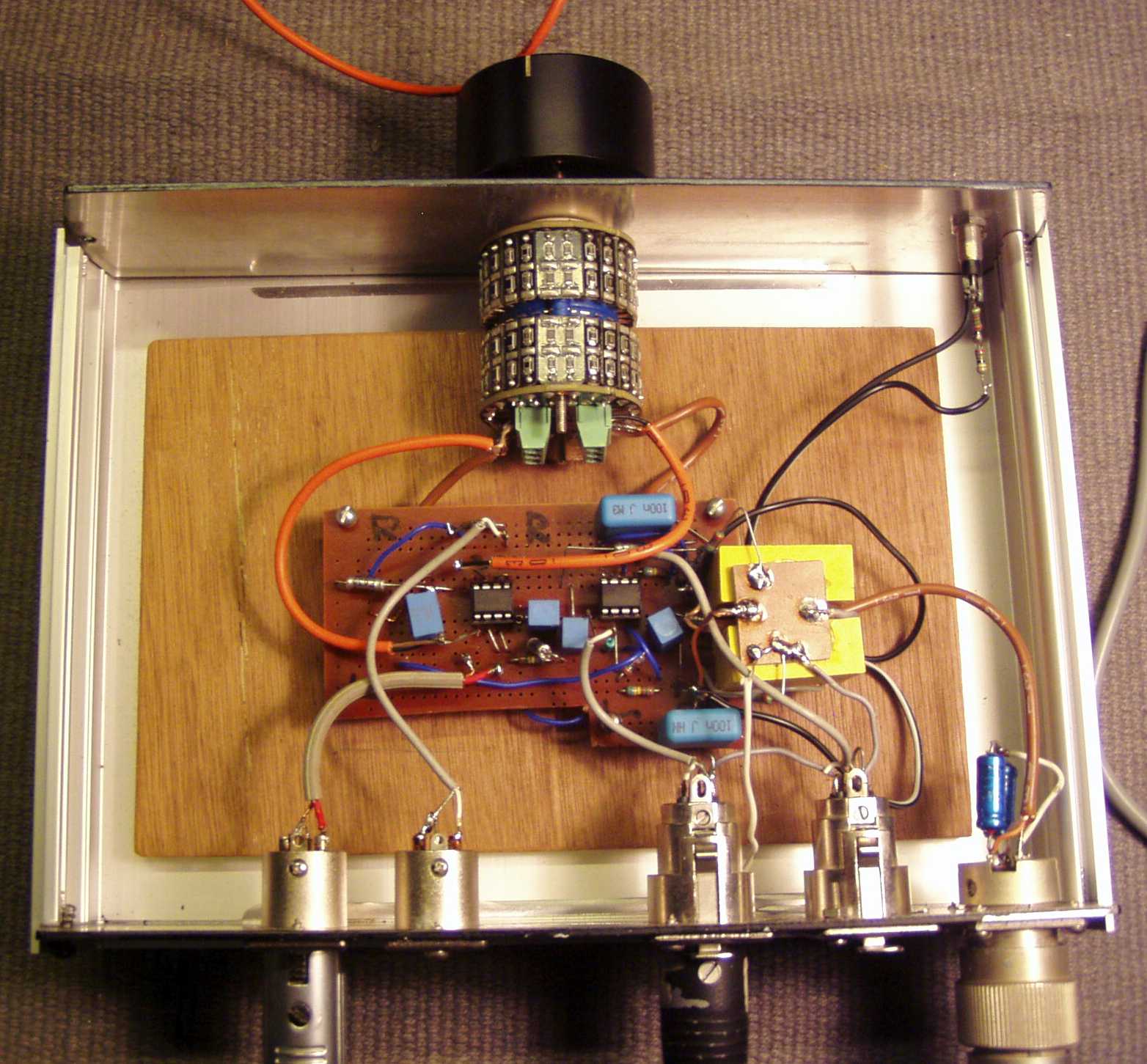
The layout is simple, two IC's, non inverting configuration, and a volume control in between. About 10 times gain on the first IC, and the second works as a output buffer with unity gain, no problem, since 4562 is unity gain stable. I could have used a dedicated buffer IC, but since I know what loads the line amp will be exposed to, I stayed with 4562 due to it's low distortion.
Volume control is a true attenuator, only 2 resistors in the signal path. They are SMD, and 0.1 % tolerance, there are 24 steps. See picture with open amp. XLR in and out connectors, only one stereo pair in and out, no switches. Input impedance is 33 K ohms. Volume attenuator is 10 K ohms.
Power supply is +/- 15 Volts, and it is housed in a separate box. The supply electronics are all transistors, no IC's, and was originally made for me by a friend as power supply for a Hiraga moving coil preamplifier. Very stable, and very low noise due to carefully selected components – I will try to find a diagram and add it to this section.
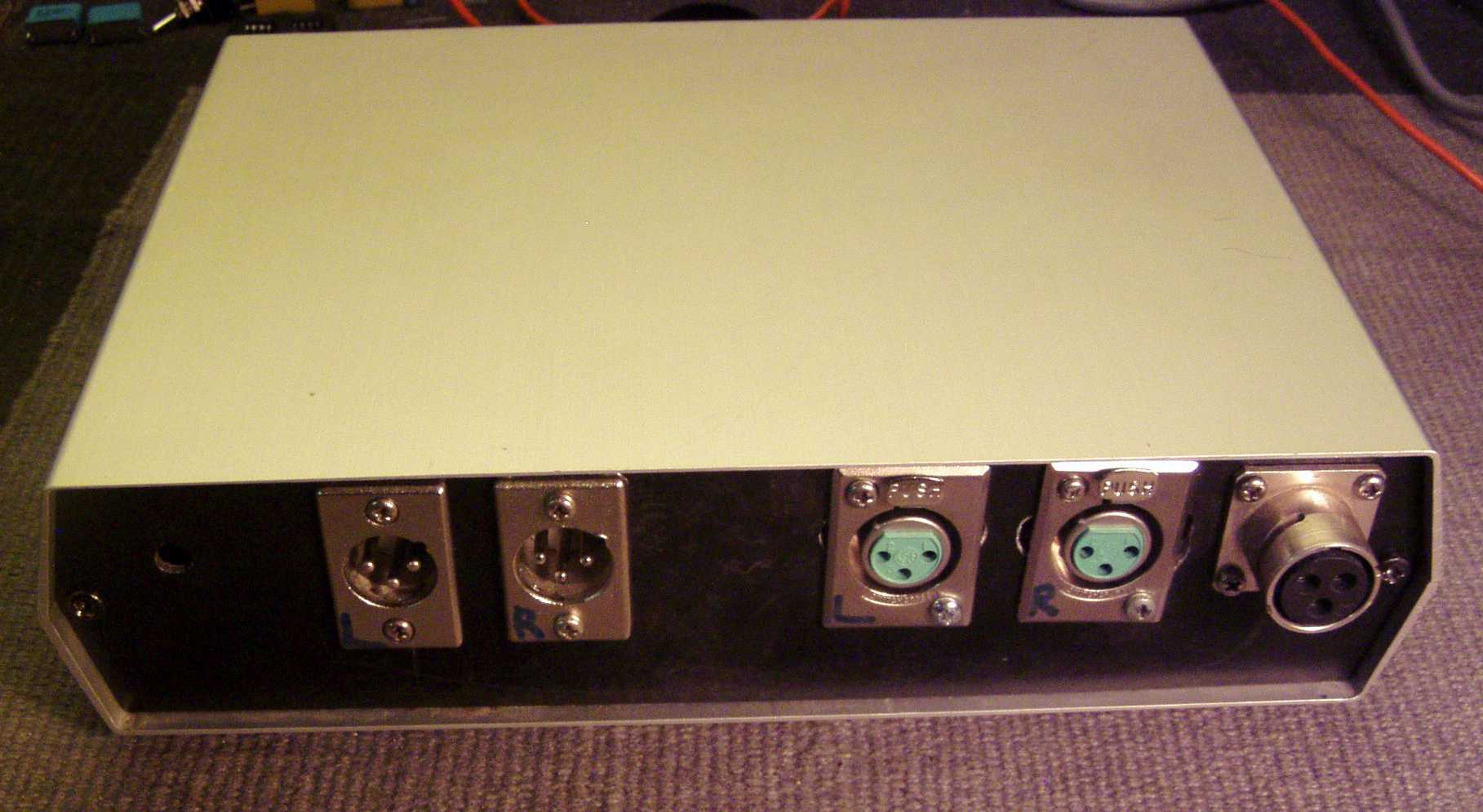
PSU connector is a 3-pole bayonet connector, rear, right on the amp.
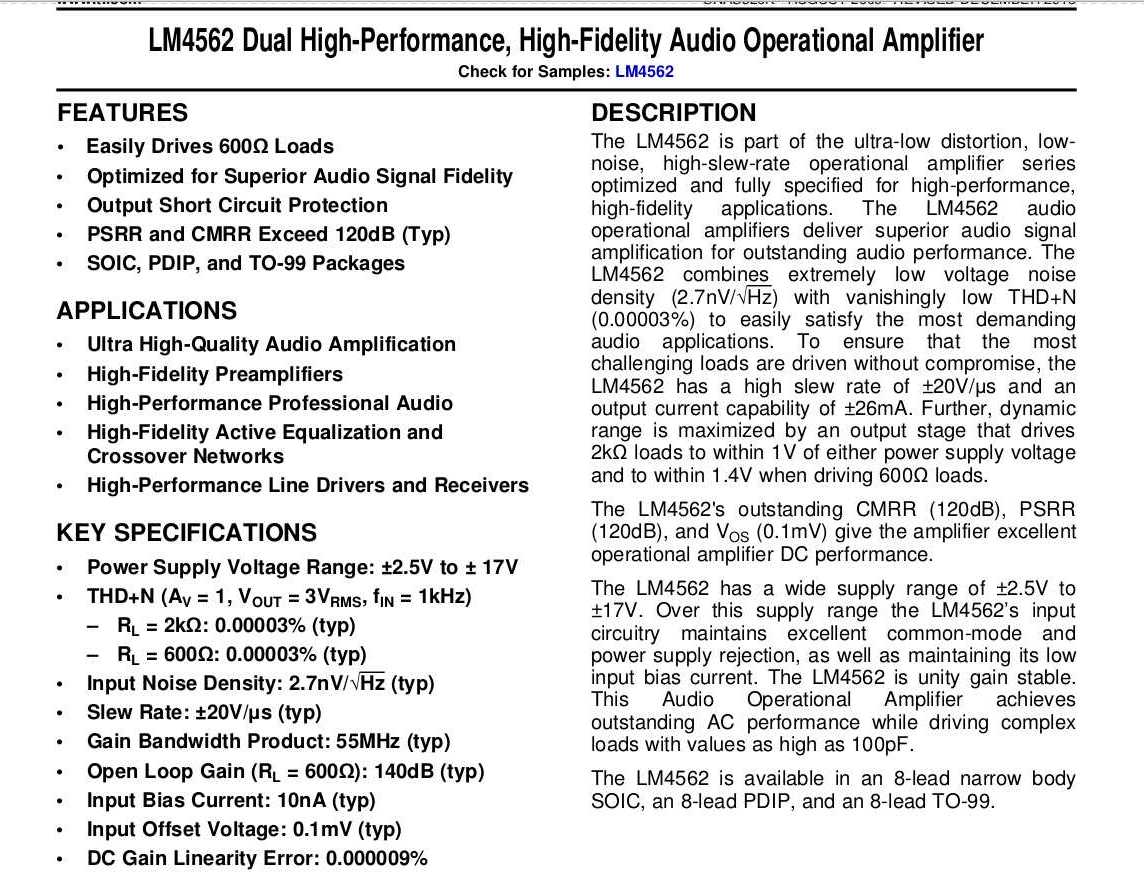
Why LM 4562? First of all, the extremely low distortion. I also use my LJLineAmp2019 for my music making activities, and today's standards are high. I use 96 K Hz sampling frequency, 24 bit resolution, (32 bit float internally), soundcards with signal-to-noise ratios better than -120 dB, and very low distortion. I don't want to use line amplification that degrades the sound. (But yes, sometimes I do want coloration of the sound, and in that case I use other relevant electronics to do this type of job).
Slew rate is 20 V per microsecond, and that figure is fine with me, I don't need a faster amplifier.
IC's are socket mounted, not soldered, makes it easy to change if a new and even more fantastic IC appears on the market.